Halal Eco-Luxury Villas in Bali: Green & Private
 Halal Luxury Bali Editorial Desk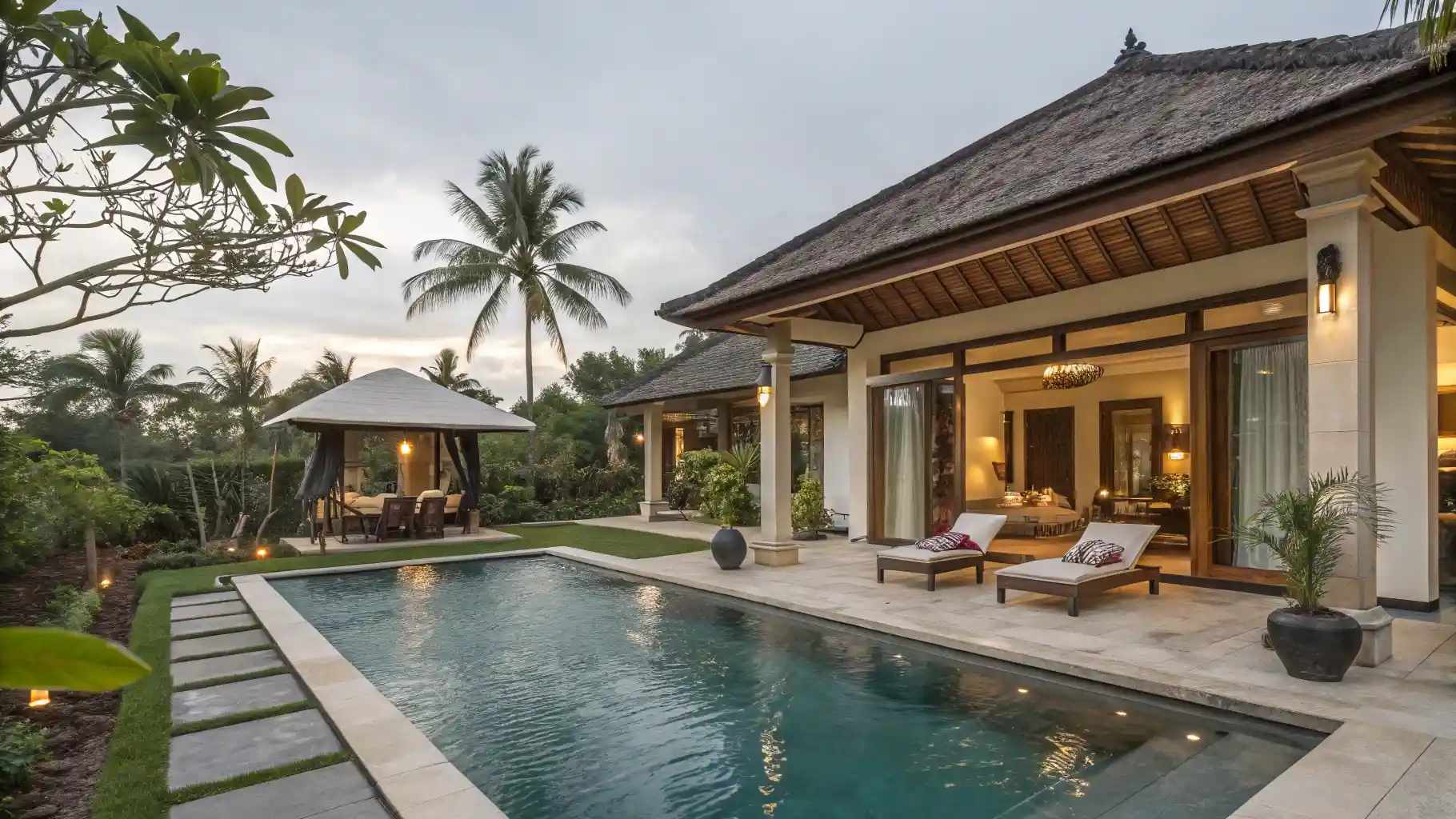
Halal eco luxury villas Bali travelers ask about are real, bookable, and growing in number: private, fully walled villas built from bamboo and reclaimed teak, powered partly or fully by solar, run plastic-free, and operated with the privacy and halal dining standards Muslim families actually need. As of 2026, the strongest options cluster around Ubud and the quieter stretches near Seminyak and the southern coast, and the best of them match five-star resorts for comfort while beating them on seclusion. This guide explains what qualifies as a genuine halal eco-villa, where to find one, what it costs, and how to have every detail arranged before you land.
What Are Halal Eco Luxury Villas in Bali?
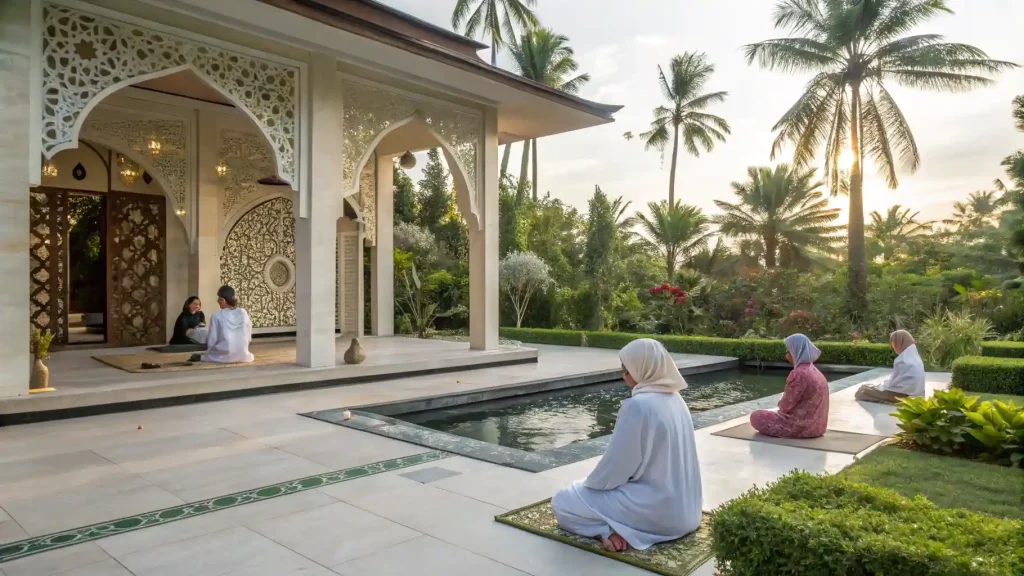
The term describes private villas that satisfy two checklists at once. On the environmental side: solar or hybrid power, natural building materials such as bamboo, alang-alang thatch, and local stone, responsible water management, and a genuine no-single-use-plastic policy rather than a token bamboo straw. On the halal side: a fully walled compound with a screened private pool, a kitchen that can be run halal-only for the length of your stay, an alcohol-free minibar on request, qibla direction marked in the bedrooms, and prayer mats available without having to ask twice.
What makes this intersection powerful is that the two checklists reinforce each other. Eco-villas are usually standalone builds in low-density areas — walled gardens, no shared corridors, no overlooked balconies. That is precisely the architecture Muslim families search for when they want women and children to swim, relax, and dress comfortably without public exposure.
- Energy: solar arrays or hybrid solar-grid systems, cross-ventilation and shaded design that reduce air-conditioning dependence
- Materials: bamboo structures, reclaimed teak, volcanic stone, thatched roofing sourced locally
- Water and waste: filtered refill stations with glass bottles, composting, refillable toiletry dispensers
- Privacy: full perimeter walls, jungle-facing or screened pools, staff briefed on knock-and-wait etiquette
- Halal service: halal-only kitchen protocol, alcohol removed before arrival, prayer mats and qibla markers in place
Why Do Green Villas Suit Muslim Travelers So Well?
Privacy is the quiet advantage. A bamboo villa on an Ubud jungle ridge faces nothing but trees; a pool carved into that hillside is private by geography, not merely by policy. Solar-powered properties also tend to sit in calmer areas away from nightlife strips, which means no bar noise drifting over the wall during Maghrib prayer or a family dinner. For mothers who want to swim freely, and for families traveling with grandparents, this kind of built-in seclusion is worth more than any resort amenity list.
There is a values alignment too. Avoiding waste and caring for the environment sit comfortably within Islamic principles of stewardship and moderation, so choosing a solar-powered, plastic-free stay is not a compromise on faith — it is an extension of it. Conscious Muslim travelers no longer have to pick between a villa that respects the earth and one that respects their religious needs.
What Does Farm-to-Table Halal Dining Look Like?
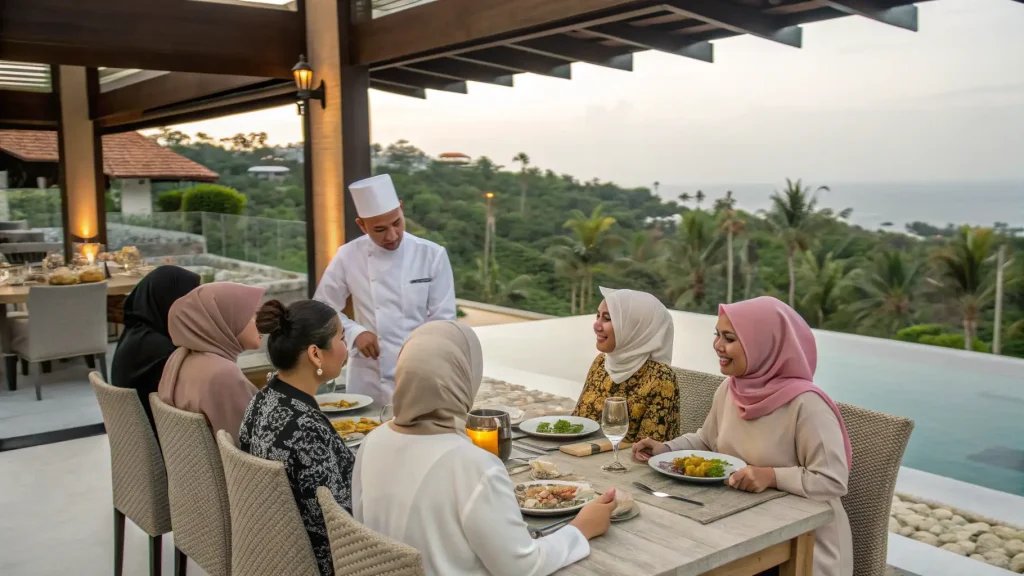
Halal sourcing in Bali is far easier than most first-time visitors expect, because Indonesia is a Muslim-majority country with a national halal certification system administered by BPJPH as of 2026. The real advantage of a villa, though, is kitchen control. When your private chef runs the kitchen halal-only, there is no cross-contamination risk, no alcohol in the cooking, and full visibility over every ingredient — something no restaurant buffet can promise.
A well-run farm-to-table program looks like this: vegetables and strawberries from the highland farms around Bedugul, tropical fruit from local markets, fresh seafood landed at Jimbaran in the morning and grilled at your villa that evening, and chicken and beef from halal-certified suppliers. Breakfast might be nasi goreng and fresh juice by the pool; dinner a private barbecue after Isha, timed around your family, not a restaurant’s seating schedule.
For nights out, Bali has established halal-certified restaurants across Seminyak, Nusa Dua, and Kuta, so date nights and big family dinners outside the villa are easy to arrange — a concierge who knows the current certified list saves you the guesswork.
How Do Plastic-Free Stays Work in Practice?
Bali banned single-use plastic bags, straws, and styrofoam back in 2019, and the island’s better villas have moved well beyond that minimum. In a genuinely plastic-free stay you can expect filtered water stations with glass bottles in every room, bamboo or steel straws, ceramic refill dispensers instead of miniature toiletry bottles, cloth market bags for shopping trips, and drivers who carry refill jugs on day tours so nobody buys bottled water at every stop. It is a small operational discipline that, over a ten-day family trip, keeps hundreds of plastic items out of Bali’s rivers and beaches.
Where Should You Stay: Ubud, Seminyak, or the Coast?
Ubud — the eco heartland
Ubud and its surrounding valleys hold Bali’s strongest concentration of bamboo architecture, rice-terrace views, and jungle pools, which makes it the natural base for this style of trip. Cooler evenings, farm proximity, and deep quiet suit families who want nature over nightlife. Start with our curated list of halal villas in Ubud if green design and privacy top your list.
Seminyak — beach access plus halal dining
Seminyak offers walled villa compounds a few minutes from the beach, with halal-certified restaurants and family-friendly cafes within a short drive. It suits groups who want sunset walks, shopping, and easy dining variety while keeping a private pool behind their own gate.
Nusa Dua and the quieter south
Nusa Dua’s calm, swimmable beaches and well-established halal dining make it the easiest area for multi-generation groups, while nearby Uluwatu adds dramatic clifftop scenery for couples. Wherever you lean, browse the full collection of halal villas in Bali to compare areas side by side.
Practical Guide: Prayer, Mosques, and Arrival
- Airport: Ngurah Rai International Airport has a musholla, so you can pray on arrival before the drive to your villa.
- Friday prayers: Masjid Agung Sudirman in Denpasar is one of the island’s largest mosques; Masjid An-Nur in Kuta is convenient when you are staying in the south.
- At the villa: qibla markers, prayer mats, prayer-time reminders for staff scheduling, and a quiet space for tarawih if you visit during Ramadan can all be arranged in advance.
- On tour: itineraries can be built around prayer times, with mosque or musholla stops mapped along the route.
What Do Halal Eco-Villas Cost in 2026?
| Villa type | Indicative nightly rate | Best for |
|---|---|---|
| One-bedroom bamboo or eco villa (Ubud area) | USD 150 – 400 | Couples, honeymoons |
| Two- to three-bedroom eco-luxury villa with private pool | USD 350 – 800 | Families |
| Four-bedroom-plus staffed estate with solar power and chef | USD 800 – 2,000+ | Multi-generation groups, reunions |
These figures are indicative as of 2026 and vary with season, length of stay, and included services such as a private chef or driver. Final rates are always confirmed at booking, and longer stays typically unlock meaningful discounts.
When Should You Book?
Bali’s high season runs July to August, and the Eid al-Fitr period brings a second surge of Muslim family travel — and because true eco-luxury inventory is small, the best walled, solar-powered villas sell out earliest. Book four to six months ahead for those windows. The shoulder months of April to June and September to October offer the same villas at gentler rates, with lush landscapes and lighter traffic.
Plan It End-to-End With One Concierge
The difference between a good Bali trip and a flawless one is coordination: the villa, the halal-only kitchen briefing, the private chef, the driver, and prayer-time-aware tours all working from one plan. Our halal concierge team arranges exactly that — villa selection, alcohol removal before check-in, farm-to-table menus, airport pickup, and day trips to waterfalls, rice terraces, and snorkeling spots timed around your family’s rhythm. Part of Juara Holding Group — operating from Bali across Indonesia since 2015 — we handle the details so you simply arrive. Message us on WhatsApp at +62 811-2859-0000 or email sales@balipremiumtrip.com with your dates, group size, and any shortlist of halal eco luxury villas Bali has caught your eye with, and we will send a tailored proposal with transparent pricing.