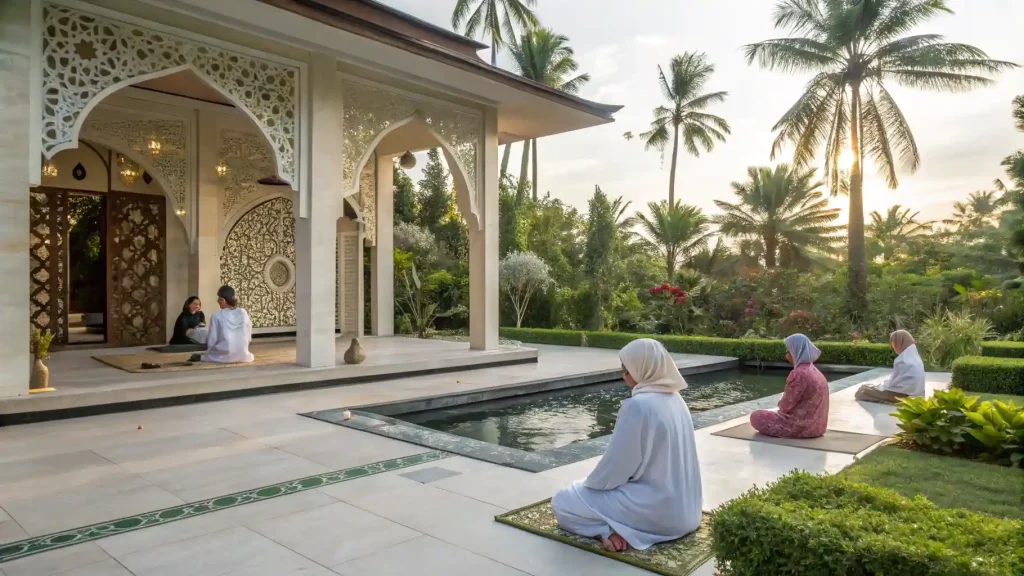
Wudhu & Prayer at Bali Malls and Attractions
 Halal Luxury Bali Editorial Desk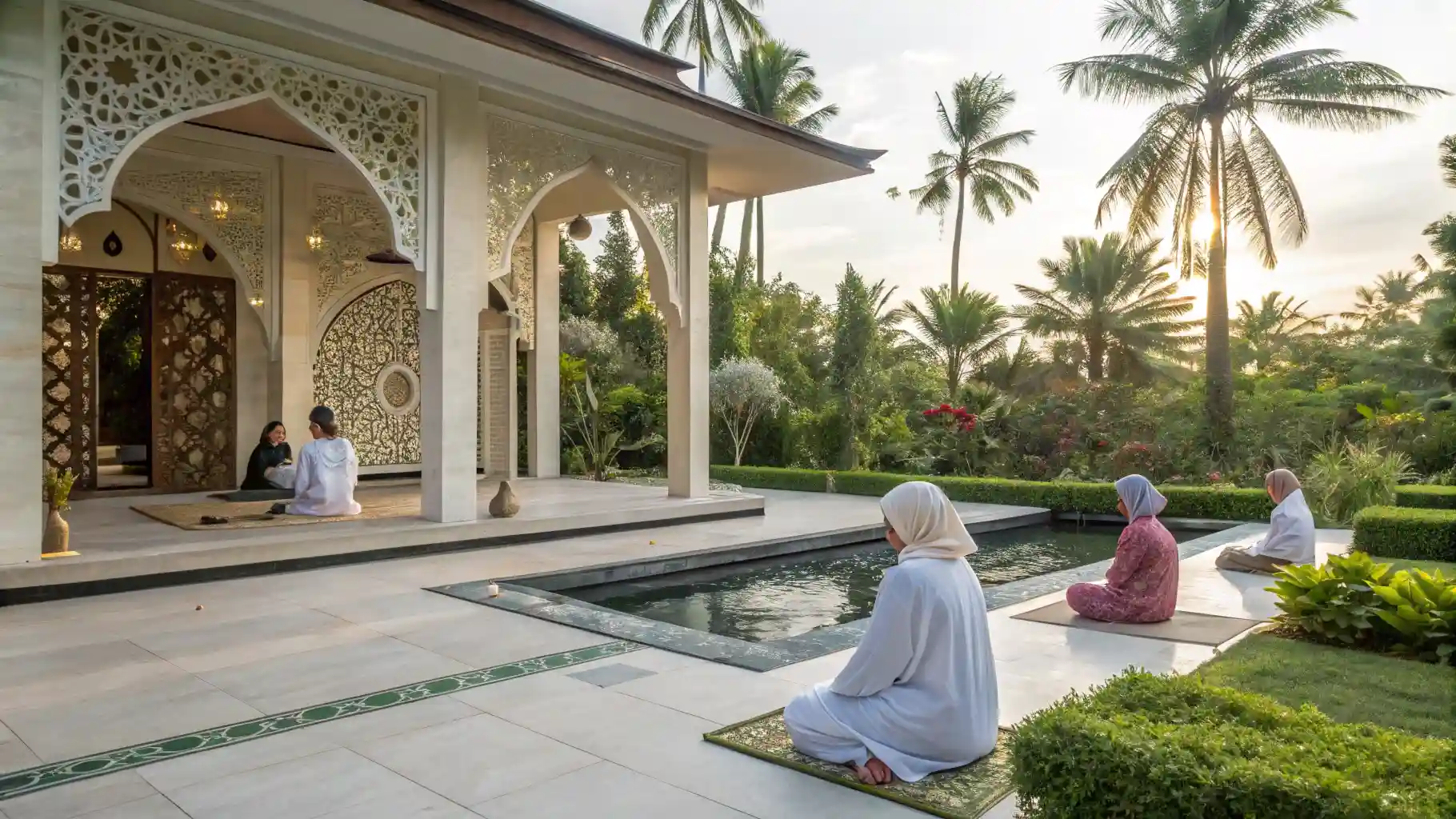
Yes, you can keep your five daily prayers while sightseeing in Bali. As of 2026, most major shopping malls and many large attractions on the island provide a musholla (prayer room) with wudhu taps, and where no dedicated room exists, a clean restroom plus a compact travel prayer kit covers the gap. This guide maps the wudhu and prayer facilities at Bali attractions, malls, and waterparks that Muslim travelers actually visit — Beachwalk, Mal Bali Galeria, cultural parks, and beyond — so you never have to cut a day short to find a place to pray.
One thing worth saying upfront: although Bali is a Hindu-majority island, it hosts millions of Indonesian domestic travelers every year, most of whom are Muslim. That is why prayer rooms are far more common here than first-time international visitors expect. This article covers praying while you are out; for Friday prayers and the island’s main mosques — including Masjid Agung Sudirman in Denpasar and Masjid An-Nur in Kuta — see our full Bali mosques and prayer guide, which this page complements rather than replaces.
Do Bali Malls Have Prayer Rooms?
Almost all of the large, modern malls do. The rooms are usually tucked near the parking levels or service corridors rather than the main atrium, so the fastest route is always the same: ask the information desk for the “musholla” — every member of staff will know exactly what you mean, and the word works everywhere in Indonesia.
| Mall | Area | What to expect |
|---|---|---|
| Beachwalk Shopping Center | Kuta (beachfront) | Musholla with wudhu area; ask the ground-floor information desk for directions. Convenient if you are spending the afternoon on Kuta Beach. |
| Mal Bali Galeria | Kuta, near the Dewa Ruci junction | Musholla on site; one of the easiest prayer stops when traveling between the airport, Kuta, and Sanur. |
| Discovery Shopping Mall | Kuta | Prayer room available; combine with the halal food options in the food court area. |
| Trans Studio Mall Bali | Denpasar | Musholla available; useful anchor for a Denpasar day that can also include Masjid Agung Sudirman nearby. |
| Level 21 Mall | Central Denpasar | Musholla on site; handy during shopping or errand runs in the city. |
Room sizes and conditions vary — some mushollas are simple carpeted spaces with a curtain divider between the men’s and women’s sections, others are larger and air-conditioned. Prayer mats and a few mukena (prayer garments for women) are usually provided, but during the July–August high season and around the Idul Fitri holiday period the rooms get busy at Dhuhr and Asr, so bringing your own mat and mukena is the more comfortable option.
Wudhu and Prayer Facilities at Bali Attractions and Waterparks
Attractions are less uniform than malls, but the pattern is predictable: the bigger and more family-oriented the attraction, the more likely it has a proper musholla. Here is how the major ones break down as of 2026 — and when in doubt, ask guest services on arrival rather than searching mid-afternoon.
- Garuda Wisnu Kencana (GWK) Cultural Park, Ungasan: a musholla is available on the grounds; ask staff at the entrance area to point you to it before you walk up to the statue plaza.
- Bali Safari and Marine Park, Gianyar: run by a group long accustomed to Indonesian Muslim families; prayer facilities are available inside the park — confirm the location at guest services when you collect your tickets.
- Tanah Lot, Tabanan: a simple musholla sits in the parking and market area outside the temple grounds, which is practical because sunset at Tanah Lot overlaps with Maghrib. Pray first, then walk down for the view.
- Waterbom Bali, Kuta: the park hosts a steady flow of Muslim guests; check with guest services about the prayer space, and note that the private family changing rooms make wudhu straightforward even on a swimwear day.
- Ulun Danu Beratan, Bedugul: the hilltop Al-Hidayah Mosque sits directly beside the lake area, making this one of the most scenic prayer stops on the island — no improvisation needed.
- Krisna and other large souvenir centers: the big oleh-oleh (souvenir) stores that drivers stop at almost always have a musholla, which makes them useful mid-route prayer breaks as well as shopping stops.
- Ngurah Rai International Airport: mushollas operate in both the domestic and international terminals, so you can pray on landing before your driver picks you up, or before a red-eye departure.
Smaller boutique attractions — swings, coffee plantations, hidden waterfalls — usually have no formal prayer room. That is where the next two sections matter.
What Makes a Restroom Wudhu-Friendly?
When there is no musholla, you will be making wudhu in an ordinary restroom, and Indonesia is genuinely one of the easier countries in the world to do this. Most Balinese restrooms at attractions and restaurants include either a hand-held bidet spray or a water dipper (gayung) and tub, both of which make washing feet far simpler than the paper-towel acrobatics required in many Western airports. What to look for:
- A bidet spray or gayung: present in the majority of restrooms at established attractions; this solves the hardest part of wudhu on the go.
- A floor drain: common in Indonesian bathrooms, so splashed water is not a problem the way it is on carpeted or fully dry floors.
- A hook and a dry ledge: for keeping your bag, socks, and phone dry — small thing, big difference.
- Accessible or family restrooms: at waterparks and beach clubs these give you privacy and space; staff rarely mind when you explain it is for prayer washing.
Two etiquette notes: dry the floor area around the sink with a paper towel when you finish, and avoid lifting your foot into a shared sink during busy periods — the bidet spray in a cubicle is the more discreet route. Small courtesies keep these facilities welcoming for the next Muslim traveler.
What Should Be in Your Portable Prayer Kit?
A pocket-sized kit means any clean corner — a villa lawn, a beach pavilion, a quiet mall corridor — becomes a usable prayer space. Ours fits in a small drawstring pouch:
- Travel prayer mat — thin, foldable, with a waterproof underside for grass and sand.
- Compact mukena for women — the travel versions pack down to the size of a fist.
- Qibla and prayer-time app — set to Denpasar; Bali runs on WITA (UTC+8), and Maghrib typically falls between roughly 6:00 and 6:30 pm depending on the month, so always check the day’s times rather than assuming.
- Small water bottle or collapsible cup — backup wudhu water for waterfalls, rice-terrace walks, and beaches without restrooms.
- Microfiber towel and spare socks — dry feet quickly after wudhu.
- Plastic zip bag — keeps the wet items separate afterward.
If you arrive without any of this, the large souvenir centers and mall supermarkets sell prayer mats and mukena inexpensively — indicative spend is a few dollars, though prices vary by store.
How Do You Plan a Sightseeing Day Around Prayer Times?
The trick is sequencing, not sacrifice. Route your day so that Dhuhr and Asr land at a mall, a large attraction, or a halal lunch stop with a musholla, and keep Maghrib for your villa or a known prayer point like Tanah Lot’s parking-area musholla. A knowledgeable driver changes everything here: our halal-aware private drivers know the musholla at every major stop, build prayer breaks into the itinerary without being asked, and will quietly reshuffle the afternoon if traffic threatens to squeeze Asr. Combine that with a day plan drawn from our list of halal activities and experiences in Bali and the question of where to pray simply stops being a question.
During July–August high season and the Idul Fitri travel period, add buffer time: mall mushollas queue up, roads around Kuta slow down, and the margin between Asr and Maghrib feels shorter than it looks on paper.
Prayer-Ready Days, Arranged End to End
Knowing where the wudhu and prayer facilities at Bali attractions are is half the work — having someone arrange your whole trip around them is the other half. We build complete muslim-friendly itineraries: private pool villas suited to Muslim families, halal-certified dining across Seminyak, Nusa Dua, and Kuta, drivers who plan around prayer times, and a concierge team on call throughout your stay. Part of Juara Holding Group — operating from Bali across Indonesia since 2015 — we handle the details so your family only has to enjoy the island.
Tell us your travel dates and we will map the prayer stops into your itinerary before you land. Message us on WhatsApp at +62 811-2859-0000 or email sales@balipremiumtrip.com to start planning.